

All HEIs should follow certain statutory regulations like Regular certification, quality audits, and adhering to educational acts and guidelines.
When it comes to financial compliance is needed for correct fund allocation, handling foreign contributions (FCRA), and meeting audit requirements.
Evey HEI has to maintain standards with NAAC, NBA, AICTE, and peer evaluations.
These include establishing policies and committees for a safe, inclusive environment within HEIs.
HEIs should take adequate protection of student and staff records and digital infrastructure.
It is mandatory for all HEIs to prepare and adhere to annual declarations for anti- ragging, sexual harassment, safety, and other mandated areas.
The higher education institutions should build institutional compliance framework by following structured strict adherence to regular requirements, ethical standards, and risk management. This will foster a sustainable culture of compliance.
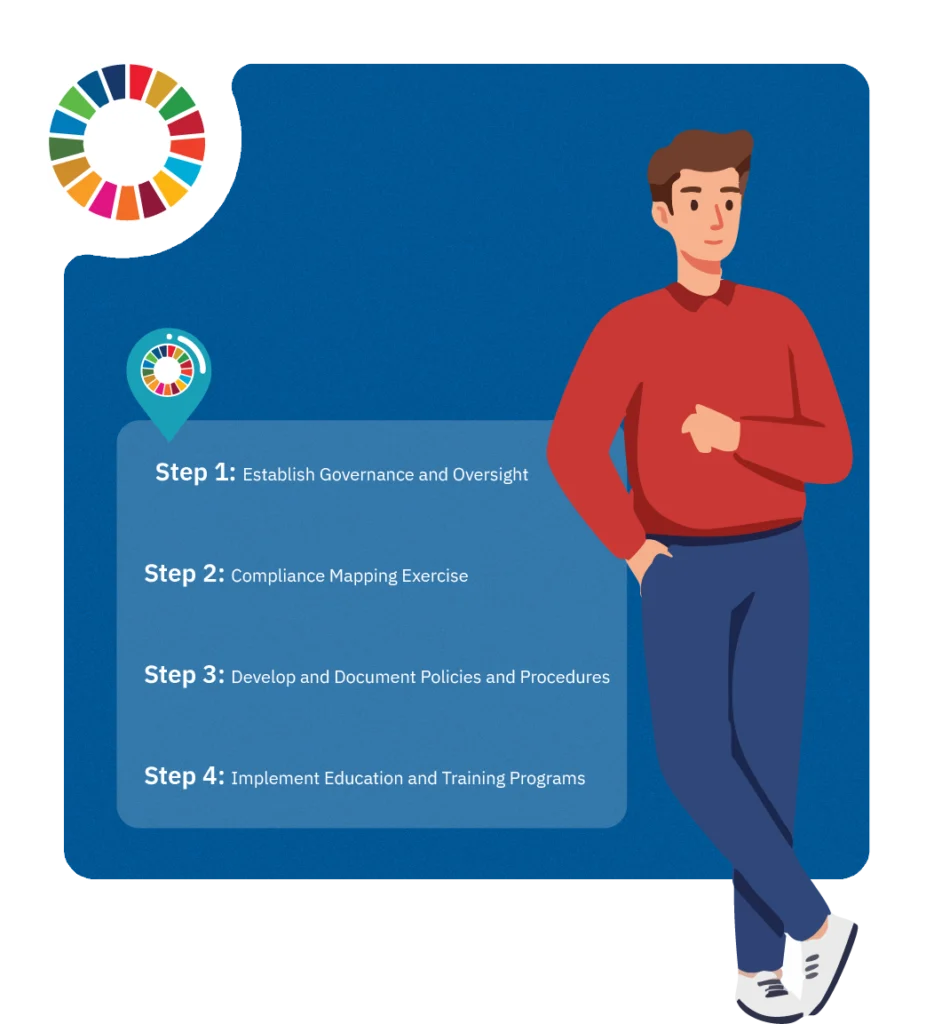
Step 1. Establish Governance and Oversight
The HEIs should designate a compliance officer or create a compliance committee to lead and oversee policies, procedures, and implementation.
They should also help the institutions reinforce leadership commitment to compliance through ongoing support, resources, and communication.
Step 2. Compliance Mapping Exercise
HEIs should build a compliance matrix — a catalog of all applicable laws, regulations, accreditation standards, and internal policies relevant to the institution. They should map responsibilities and obligations across departments, ensuring that no area is overlooked.
Step 3. Develop and Document Policies and Procedures
HEIs should create clear, actionable, and regularly updated compliance policies and procedures. They should centralize documentation for easy access and updates, and establish protocols for reporting, investigation, and correction of non-compliant activities.
Step 4. Implement Education and Training Programs
HEIs should offer regular training to staff and faculty on compliance policies, ethical behavior, and legal standards. They should encourage a culture where individuals feel empowered to report concerns and seek guidance.
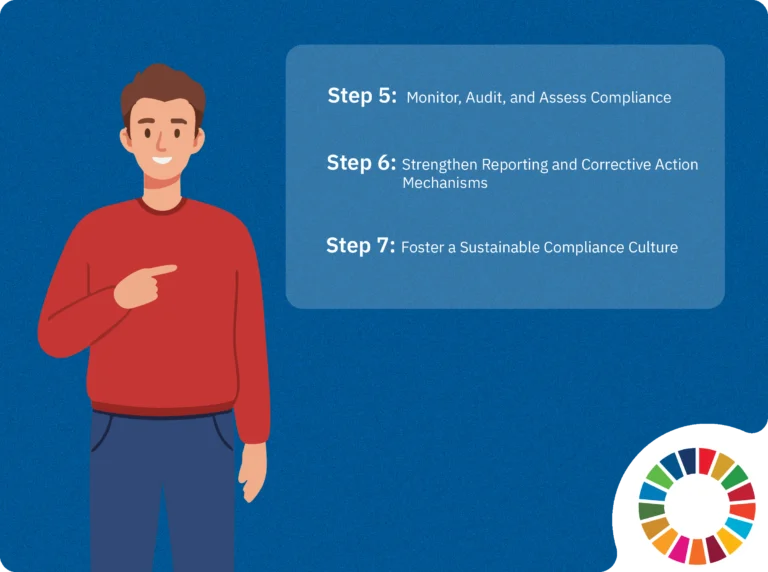
Step 5. Monitor, Audit, and Assess Compliance
HEIs should set up continuous audits, risk assessments, and compliance performance reviews to identify gaps and opportunities for improvement.
They should also collect feedback and adjust compliance measures based on audit findings and regulatory changes.
Step 6. Strengthen Reporting and Corrective Action Mechanisms
HEIs should establish transparent internal and external reporting channels that are protected from retaliation or bias. They can automate data collection and progress monitoring for corrective action plans and inspection reports.
Step 7. Foster a Sustainable Compliance Culture
Finally, HEIs should promote ethical compliance and integrity through leadership modeling, regular communication, and institutional values tied to sustainability and equity.
Legal and ethical compliance assures every stakeholder that institutional practices are transparent, protecting the HEIs reputation and enabling leaders to inspire confidence.
If the compliance systems are in place, leaders can focus on long-term visioning and innovation instead of firefighting legal and operational crises. This allows HEIs to pursue ambitious goals like SDG alignment and global rankings.
Compliance frameworks in HEIs give leaders a structured approach for resolving dilemmas, fostering a culture of integrity, inclusion, and accountability in all the institutional activities.

Transformative leaders consult widely, ensuring compliance policies are relevant, inclusive, and responsive to evolving challenges, such as digital privacy, DEI standards, or crisis management.
When senior administrators actively champion compliance, it cascades through departments, embedding policies and values institution-wide.
Leaders unify different reporting lines and compliance functions, moving the HEIs from reactive to proactive, integrated risk mitigation and ethical governance.
Compliance establishes the regulatory and ethical foundation for HEIs, ensuring all activities and reporting meet legal, accreditation, and policy requirements while fostering transparency and accountability.
Leadership builds on compliance by setting a strategic vision, empowering institutional culture, and driving continuous improvement, making sure compliance translates into real-world impact and institutional credibility.
The MapSDG platform acts as the connective tool, enabling HEIs to efficiently track SDG-aligned actions, automate compliance documentation, and generate transparent reports that reinforce leadership goals and showcase institutional impact to internal and external stakeholders.
By integrating compliance processes, leadership initiatives, and MapSDG’s data-driven insights, HEIs can benchmark progress, identify gaps for improvement, and position themselves as leaders in sustainable development both nationally and globally.

Nazareth College integrated the SDGs into its institutional framework through the Nazareth SDG Transformation Centre, promoting sustainability as a core academic and social mission. Instead of viewing SDG work as documentation for NAAC, the college adopted MapSDG to track community engagement, measure outcomes, and align teaching-learning with SDG indicators.
The transformation of Indian Higher Education Institutions (HEIs) from compliance-driven entities to leaders in sustainable development marks a crucial step toward realizing the vision of the SDGs. Compliance forms the structural backbone that upholds integrity, transparency, and accountability, but leadership brings life to these systems through vision, innovation, and purposeful action. Together, they ensure that sustainability is not merely a checklist item but a lived institutional culture.
By integrating compliance mechanisms with leadership strategies, HEIs can cultivate environments that encourage ethical governance, social inclusion, and global relevance. Platforms like MapSDG further enable this evolution by providing data-driven insights that link academic practices with measurable SDG impact. As exemplified by Nazareth College of Arts and Science, when compliance frameworks are infused with leadership intent and technological tools, they move beyond documentation to transformation by shaping institutions that not only educate but also empower communities and ecosystems.
Ultimately, the journey “from compliance to leadership” is not just an administrative shift; it is a moral and strategic commitment to create HEIs that lead by example and institutions that educate for sustainability, innovate for progress, and collaborate for a better world.
